
Safety
Stay independent. Stay connected. Feel more confident at home.
For years, families were pushed toward the same safety route: a pendant first, a pull cord later, and a home that slowly started to look like a care facility. But technology has changed, families have changed, and the way real reassurance is created has changed too.
Today, for many households, discreet room-based safety may be the stronger first step. Why? Because feeling safe should not require looking vulnerable. Discreet safety technology can support independence, help identify potential concerns and keep residents connected with authorised family members. Wearable triggers can still play a part where wanted. But for many homes, the first big win is discreet coverage, everyday dignity and a family that feels genuinely reassured.

Security.
Safety.
Independence.
Reassurance.
The care-home look changed. Most safety products did not.
We created Guardian 1st to give homeowners and families a clearer, more reassuring way to approach safety at home. Whether the priority is independence, health, home condition, or future peace of mind, our focus is always the same: honest findings, plain-English explanations and sensible recommendations you can trust.

A pendant around your neck should not decide how safe you feel at home.
That is the blunt truth.
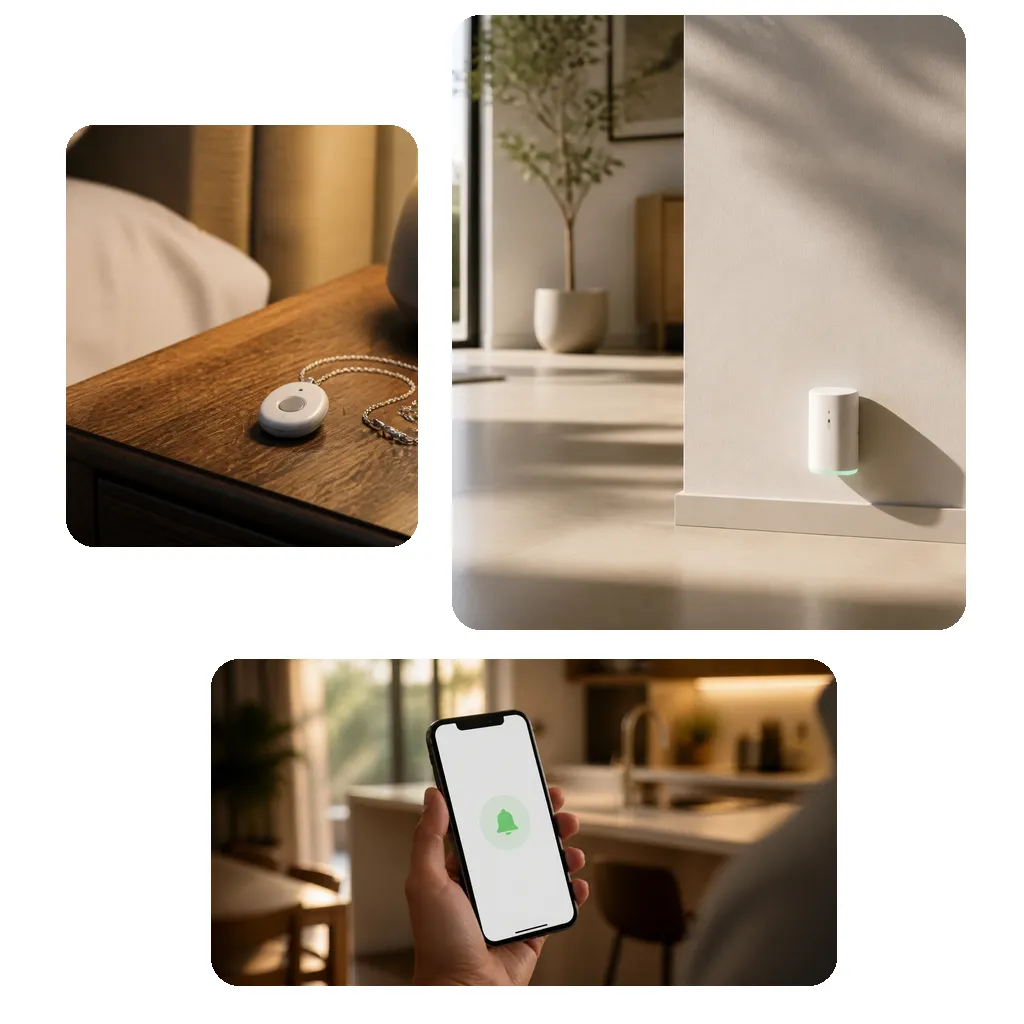
Traditional personal alarms can absolutely play a valuable role. But a visible wearable shapes how a person feels every day — and it only helps if it is being worn at the right moment.
Room-based safety plays a different game. It is not waiting in a drawer or on the bedside table. It is designed into the rooms you actually live in, supporting you quietly in the background and keeping a discreet watch on the things your family agreed matter.
A pendant only works when it is worn. Discreet room-based safety is designed to be there either way.
Why the old pendant-first story is often out of date
The old sales pitch was simple: wear the pendant, press the button, and let the alarm take care of the rest.
But that is no longer the whole story.
Families live further apart, and today's reassurance typically comes from connection, discreet sensing and an agreed plan, not just a single device. Arrangements vary, notifications vary, and real confidence comes down to how the response actually works.
That is why the question has changed.
It is no longer:
Should mum wear a pendant?
It is:
What should be in place so the whole family feels reassured — without her home feeling like a care facility?
For many households, the answer is discreet room-based safety first.
Why Start With Safety
Why Guardian's approach to safety makes sense for so many homes
Safety without the care-home look
Discreet, room-based safety technology designed to blend into the home, rather than a visible collection of wearables and emergency pull cords.
Intelligent room-based safety
The proposed Guardian Safety Hub and discreet Room Pods use room-based sensing that may help identify potential falls, unusual inactivity or requests for assistance. This is potential-event detection — not medical diagnosis and not a guarantee of detection.
A voice when you need one
The vision: two-way voice communication from different rooms, so residents can speak with authorised family members or other permitted contacts. Advanced functions are described as available only once implemented and validated.
Family reassurance without constant checking
Authorised contacts may receive relevant notifications and follow an agreed response plan — staying connected without having to continually telephone, visit or monitor.
Privacy and dignity by design
Sensor, microphone, audio-processing, access-control and data-retention arrangements are explained openly at your assessment. No jargon, and no vague promises — you control who can access what.
Part of something bigger
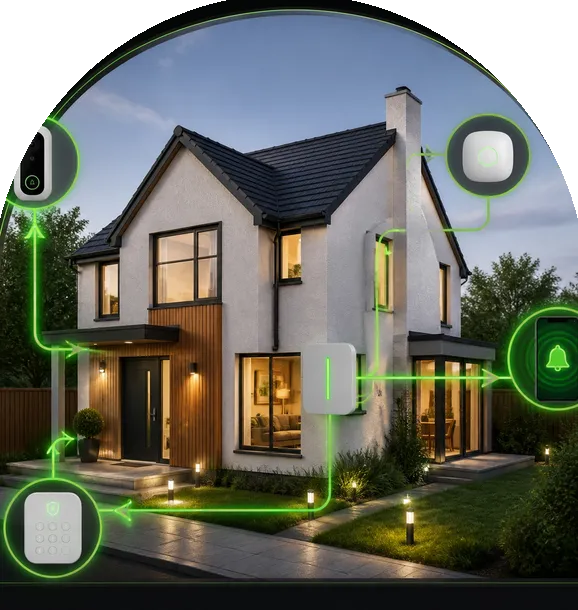
Safety can stand alone, or be combined with professional home security now or later, subject to the available equipment and integrations.
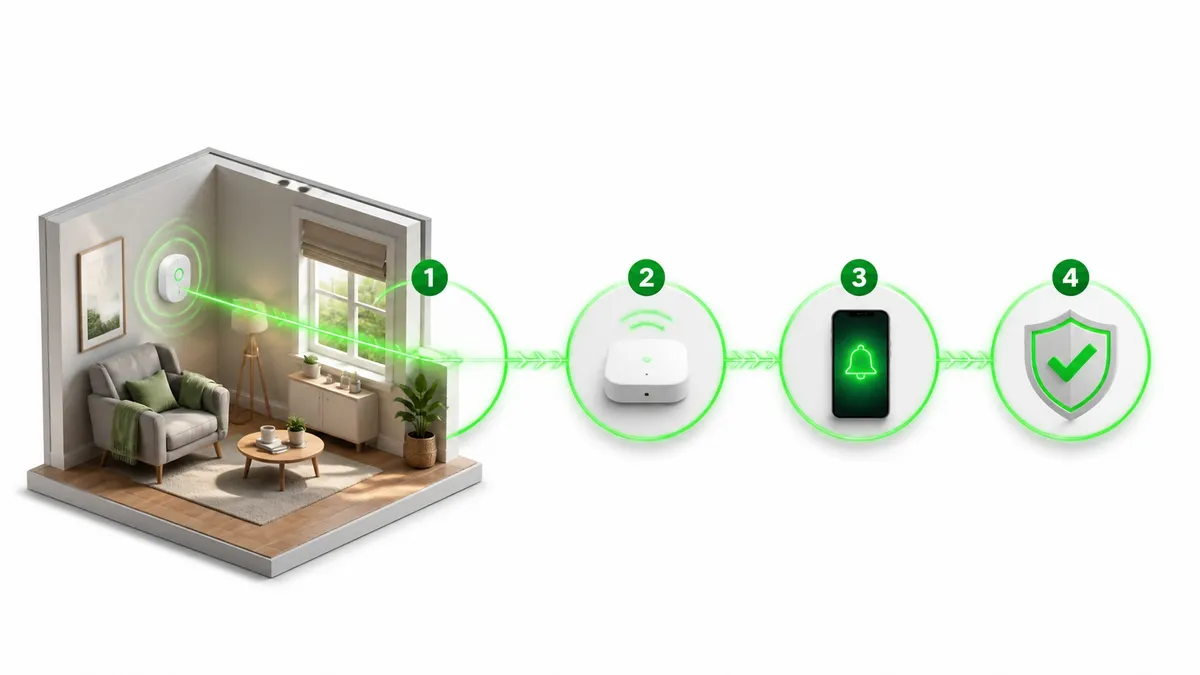
Starting with room-based safety does not mean making your home a care facility. It means knowing what happens when a concern arises:
a possible concern or request for help is identified
the system follows the available and configured check-in process
relevant authorised contacts may be notified
further escalation follows your selected service's actual arrangements
A better way to think about home protection
Most of us have been taught to think about protection in one direction: buy an alarm, fit a lock, and hope for the best.
Guardian 1st changes that.
Your home can play an active part in looking after the people who live in it — and in keeping family connected to what matters. Protection becomes something designed, installed and supported around your home and your priorities.
That is a fundamentally better position than simply hoping nothing ever happens.

Understand your home. Explore your options. Protect what matters.


Quick links
Other
© Guardian 1st. 2026. All Rights Reserved.